.png)
If You’re Going to Sri Lanka This Summer, You’re Probably Staying on the Wrong Coast

It sounds bold. Possibly even unfair. But if you are planning a trip to Sri Lanka in June, July, or August and your beach booking is automatically in Mirissa, Unawatuna, Bentota, or Hikkaduwa, there is a strong possibility you are not experiencing the island at its seasonal best.
This is not about opinion. It is about geography, climate patterns, and understanding how Sri Lanka truly works. Because Sri Lanka does not have one beach season. It has two. And they are dramatically different.
The Seasonal Truth Most Travelers Overlook
From December to April, the south and west coasts are exceptional. Calm seas, golden evenings, predictable sunshine. It is the version of Sri Lanka most widely promoted. But from May onward, the Southwest Monsoon gradually reshapes that coastline.
By June, sea conditions along the south begin to shift. The water becomes rougher. Swimming days become inconsistent. Cloud cover increases. Whale watching becomes less reliable. Beach erosion can even alter shorelines temporarily.
The south does not become unattractive. It simply becomes unpredictable. At the exact same time, on the opposite side of the island, something remarkable happens.
The east coast enters its prime.
The east coast awakens
From May through September, the eastern shoreline transforms into the island’s most stable coastal zone. Clear skies dominate. The sea turns calm and almost glass-like. Humidity levels drop. Visibility for snorkelling improves dramatically. This is not a secondary option. It is the peak season for the east. Yet, many travellers still default to the south simply because it feels familiar.
Trincomalee, the summer benchmark

Trincomalee during July feels almost unfair in its perfection. Wide crescent-shaped bays. Turquoise water stretching into a deep natural harbour. Gentle waves suitable for confident swimmers and relaxed bathers alike.
Snorkelling at Pigeon Island reveals coral gardens and reef sharks moving through clear water. Dolphins are often spotted offshore. Even during high summer, the beaches rarely feel overrun. It is the kind of coastal experience travelers assume they will find everywhere in Sri Lanka. In reality, they will only find it in the east during these months.
Nilaveli, quiet confidence

A few kilometres north, Nilaveli offers something slightly different. The pace slows further. Boutique resorts sit back from palm-fringed sand. Morning light stretches long across empty shoreline.
There is a stillness here that southern beach towns struggle to replicate in peak months. No excessive noise. No overdevelopment. Just space. For travellers seeking privacy and refinement in June or July, Nilaveli quietly outperforms the trendier alternatives.
Passikudah, stability in the sea

Further south along the eastern belt lies Passikudah, known for its shallow coastal shelf. The sea remains waist deep for extraordinary distances, creating calm, lagoon-like conditions.
In peak east season, this means warm, steady water ideal for families and relaxed swimmers. There are no dramatic swells. No seasonal turbulence. It feels controlled, safe, and effortlessly comfortable.
Arugam Bay, where summer comes alive
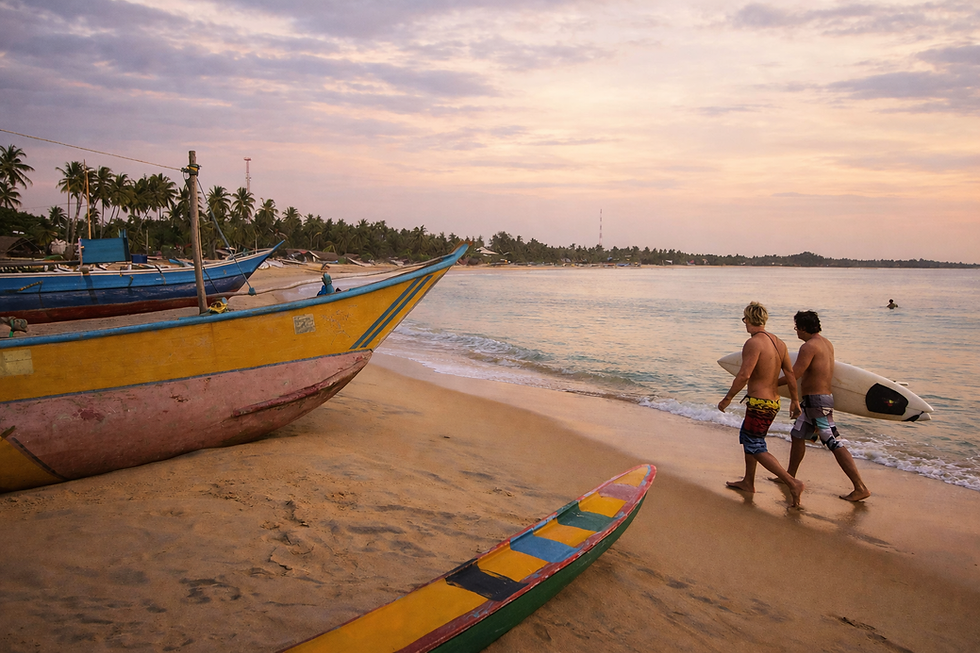
If Trincomalee is serene and Nilaveli is understated, Arugam Bay is vibrant.
By June, surfers from around the world gather here as the breaks come alive. Yoga mornings blend into surf afternoons. Evenings carry a laid-back energy that feels international but never forced.
Arugam Bay is not polished luxury. It is barefoot, social, and atmospheric. During these months, it becomes one of Asia’s most dynamic surf hubs. And yet, many summer travellers never make it there.
Why the south still dominates bookings
The answer is simple. Familiarity.
For years, the southern coastline became the default Sri Lanka beach image. It is closer to Colombo. It has stronger digital presence. It is easier to recognise on a map. But familiarity does not equal seasonality. Sri Lanka is an island that rewards those who travel with its rhythm rather than against it.
This is not a criticism of the south
Let us be clear. The south coast is magnificent. From December to April, it may well be the best stretch of coastline in the country. But June to August is not its strongest chapter. Traveling to Sri Lanka in mid-summer and ignoring the east coast is not disastrous. It is simply inefficient. You are choosing a coastline outside its prime while another coast is performing at its absolute peak.
The smarter way to travel in summer Sri Lanka
Sri Lanka demands seasonal awareness. The most satisfying itineraries align with weather systems, wildlife movements, and coastal shifts. In summer, that alignment points decisively east. Pair Trincomalee’s beaches with the ancient city of Polonnaruwa. Combine Minneriya’s elephant gatherings with Passikudah’s calm sea. Add Arugam Bay’s surf culture to a heritage journey through the Cultural Triangle. Suddenly, June, July, and August become extraordinary months to visit.
So ask yourself
If you are booking Sri Lanka this summer and automatically choosing the south because it is popular, are you experiencing the island at its best?
Or just following the crowd?
The east coast does not shout. It does not trend as aggressively. But during these months, it quietly delivers the most consistent beach conditions in the country.
And for those who know, that is no secret at all.
At Art of Lanka Tours, we design journeys around Sri Lanka’s natural calendar rather than its social media momentum. Summer belongs to the east.When planned properly, it offers a version of Sri Lanka that feels effortless, warm, and unforgettable.
Before you confirm your booking this June, July, or August, pause.
Are you staying on the right coast?
Explore seasonally crafted journeys at www.artoflanka.com


Comments